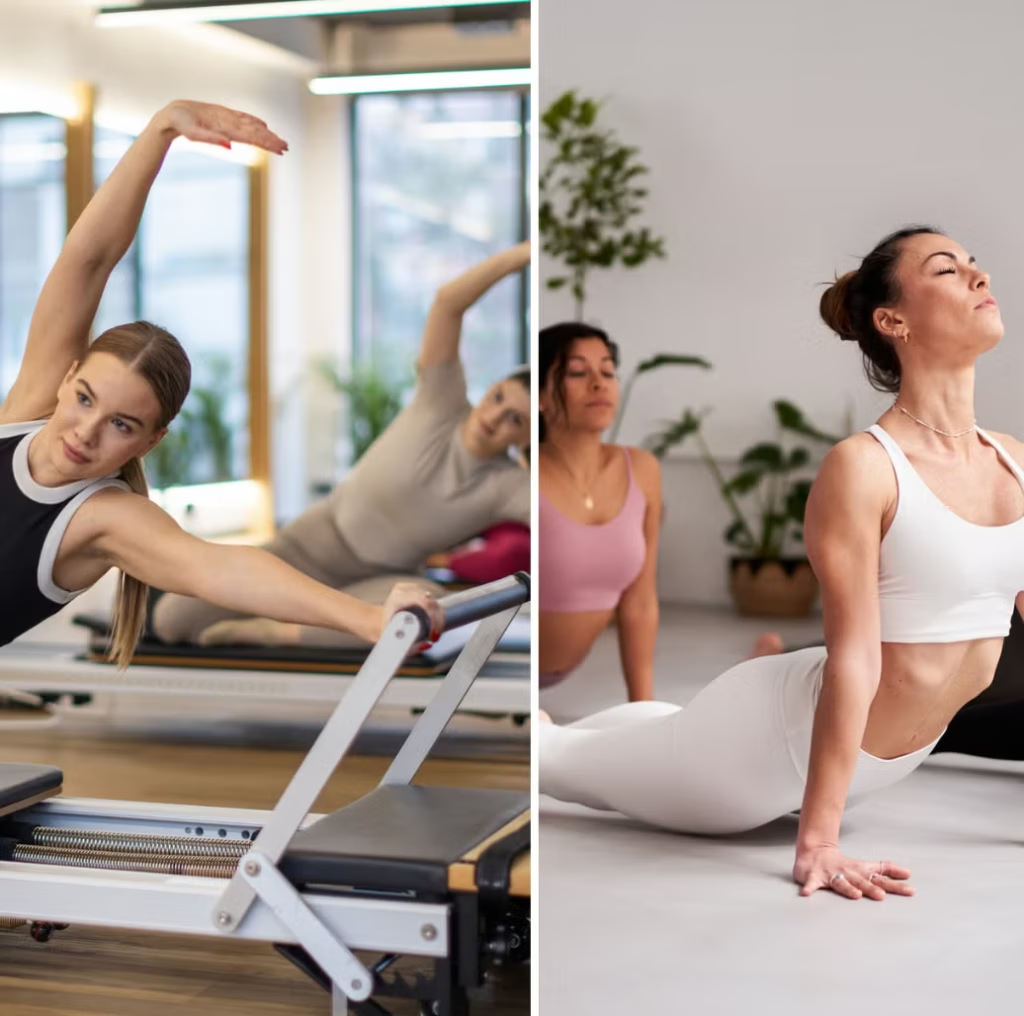
Pilates or yoga? It’s the classic dilemma when you’re looking to ease back into exercise. Both disciplines are practised on the floor, focus on breathing and are considered relaxing, but their aims and effects are quite different. This comparison will help you choose the one that best suits your needs, or understand why you might want to combine them.
For an overview of local practice, please see our A comprehensive guide to Pilates in Cannes.
Pilates and yoga: two different approaches
Yoga is an ancient discipline of Indian origin, which combines physical postures, breathing and meditation. The Pilates method, which was designed in the early twentieth century by Joseph Pilates as a method of strengthening and rehabilitating the body, focusing on the deep muscles.
In short: yoga seeks to unite body and mind and focuses heavily on flexibility, whilst Pilates aims to build a strong, toned and well-aligned body. Both are good for you, but they work on slightly different areas.
The main differences
| Criterion | Pilates | Yoga |
|---|---|---|
| Main objective | Deep strengthening, posture | Flexibility, balance, relaxation |
| Employment Centre | The core (abs, back) | The whole body and the breath |
| Spiritual dimension | Absent | Often present |
| Equipment | Mats and machines (Reformer) | Rugs and accessories |
| Ideal for your back | Highly suitable | Tailored to suit different styles |
Which one should you choose, depending on your goals?
Do you want to strengthen your core, improve your posture or relieve back pain?. Pilates is ideal, particularly on the Reformer. It’s also an excellent option to complement a back pain.
Above all, you’re looking for flexibility, relaxation and an introspective practice. Yoga will be better suited to this need.
Do you want a toned body whilst working on your flexibility?. Pilates offers this combination, and a taster session lets you try it out before you make up your mind.
Can we do both?
Of course, and it’s actually an excellent combination. Pilates builds strength and stability, whilst yoga maintains flexibility and mental grounding. Many practitioners alternate between the two depending on their needs at the time. If you’re just starting out, however, it’s best to get to grips with one discipline properly before adding the other.
Discover Pilates in Cannes
At Studio 45, you practise Pilates in keeping with the original method, with personalised support provided by Sophie Margolis, a certified instructor. To find out more about the venue and the packages on offer, see the information sheet for our studio and the page prices, or contact us.
Further reading
- Pilates in Cannes: the complete guide
- Pilates Reformer or mat Pilates: which should you choose?
- The benefits of Pilates for the body and mind
Frequently Asked Questions
Is Pilates more effective than yoga for losing weight?
Neither of these disciplines is an intense fat-burning activity. They tone the body, slim the figure and improve posture. For weight loss, they are best combined with cardio exercise and a balanced diet.
Which exercise is best for back pain?
Pilates is often favoured because it specifically targets the deep muscles that stabilise the spine. Certain styles of gentle yoga can also help, but require careful supervision.
Do you need to be flexible to do Pilates?
No. Pilates actually helps to improve flexibility as you progress through the sessions. You don’t need to be flexible to start with.